Integrating Blue Seamless Gradient Floral Pattern Assets into Professional Design Workflows
In modern digital design and print production, the selection of background assets is rarely an afterthought. It is a foundational decision that influences visual hierarchy, brand perception, and technical efficiency. The Blue Seamless Gradient Floral Pattern represents a specific category of high-utility asset that bridges the gap between organic aesthetics and structured geometric design. For professionals ranging from freelance graphic designers to marketing directors managing large-scale campaigns, understanding how to leverage this type of seamless abstract gradient vector wallpaper is essential for maintaining workflow velocity without sacrificing visual quality.
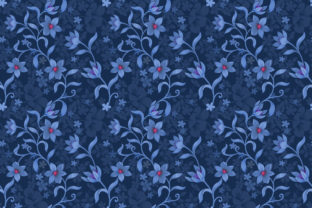
This asset class typically combines the softness of floral motifs with the precision of geometrical blue floral triangle pattern backgrounds. When sourced in high-resolution formats like JPG 5000x5000 alongside editable vector EPS and AI files, it becomes more than just a pretty picture; it becomes a flexible component in a broader production system. Whether you are preparing packaging prototypes, designing web interfaces, or creating educational materials, the integration process requires a strategic approach to file management, color grading, and scalability.
Pre-Production Planning and Asset Selection
Before opening any design software, the most critical step involves assessing whether the Blue Seamless Gradient Floral Pattern aligns with the project’s technical and aesthetic requirements. This evaluation phase prevents costly revisions later in the pipeline. Professionals should consider the end medium first. If the deliverable is a large-format banner or trade show display, the availability of the vector AI or EPS source file is non-negotiable. Raster images, even at 5000x5000 pixels, can lose integrity when scaled beyond their native resolution, whereas vector data allows for infinite resizing without pixelation.
During the planning stage, it is also vital to evaluate the gradient complexity. Seamless patterns with subtle gradients are generally safer for text-heavy layouts because they provide texture without competing for attention. Conversely, high-contrast geometrical blue floral triangle patterns may require additional masking or opacity adjustments to serve as functional backgrounds. By auditing the asset against the project brief before execution begins, teams can avoid the common pitfall of forcing a visually dominant pattern into a role that demands subtlety.
Evaluating File Format Compatibility
Different stages of a workflow demand different file formats. Understanding when to use the JPG versus the vector source files streamlines collaboration:
- JPG 5000x5000: Ideal for rapid prototyping, mood boards, client presentations, and web-based mockups where file size matters more than editability.
- Vector EPS: Best for cross-platform compatibility when sharing assets with external vendors, printers, or collaborators using different versions of design software.
- Vector AI: Essential for deep customization, including recoloring individual elements, adjusting gradient stops, or isolating specific floral or geometric components for reuse.
Maintaining an organized asset library where these three formats are linked or stored together ensures that team members can access the appropriate version for their specific task without generating redundant files.
Execution: Customization and Technical Implementation
Once the Blue Seamless Gradient Floral Pattern has been selected and placed into the working environment, the focus shifts to adaptation. Rarely does a stock asset fit perfectly into a bespoke project without modification. The true value of holding the vector AI or EPS file lies in the ability to deconstruct the pattern. In many workflows, designers extract the geometrical blue floral triangle elements to create custom borders, dividers, or iconography that matches the main background. This creates a cohesive visual language across disparate touchpoints, such as business cards, slide decks, and social media templates.
Color management is another practical consideration during execution. While the asset is labeled "blue," professional projects often require adherence to strict brand guidelines. Using global swatches in Adobe Illustrator or similar vector tools allows for instant recoloring of the entire seamless pattern. Instead of manually selecting each gradient stop, mapping the pattern’s colors to global variables enables real-time iteration. This is particularly useful during client review cycles where feedback often centers on color temperature or saturation levels.
Optimizing for Digital and Print Outputs
The implementation strategy diverges significantly depending on whether the final output is digital or physical. For web and app design, the 5000x5000 JPG serves as a master source that must be optimized. Exporting smaller, compressed tiles (e.g., 800x800px) reduces load times while maintaining the seamless tiling effect. CSS properties like background-repeat and background-size allow developers to implement the pattern responsively without serving massive image files to mobile users.
For print production, the workflow prioritizes color fidelity and registration. The vector EPS or AI file should be converted to CMYK, and gradients should be checked for banding issues that can occur during offset printing. Adding a slight noise texture or ensuring adequate bleed areas helps mitigate production risks. Because the Blue Seamless Gradient Floral Pattern relies on smooth transitions, verifying gradient mesh integrity before sending files to the printer is a necessary quality control step that saves both time and material costs.
Post-Project Integration and Systematization
After a project concludes, efficient professionals do not simply archive the work; they integrate successful assets into reusable systems. If the Blue Seamless Gradient Floral Pattern proved effective, it should be cataloged in a centralized digital asset management (DAM) system or a shared cloud library. Tagging the asset with metadata such as "seamless," "gradient," "floral," "geometric," and "blue" ensures it remains discoverable for future initiatives. This reduces the time spent searching for or recreating similar textures in subsequent quarters.
Furthermore, consider creating derivative assets based on the original pattern. A simplified monochrome version might serve as a watermark, while a cropped section could function as a header image for email newsletters. By treating the initial purchase or download as a starting point rather than a final destination, organizations maximize their return on investment. This systematic approach transforms a single background design into a versatile toolkit that supports consistent branding across multiple channels and campaigns.
Maintaining Quality Control Over Time
As design trends evolve, even timeless assets like floral gradients may require refreshment. Regular audits of your pattern library help maintain relevance. During these reviews, test older assets against current accessibility standards, especially for digital applications. Ensure that text overlaid on the Blue Seamless Gradient Floral Pattern still meets WCAG contrast ratios. If the pattern no longer performs well as a direct background, it might be repurposed as a decorative accent or retired to an archive folder. Maintaining this discipline prevents visual fatigue and ensures that every asset in active rotation continues to support high-quality outcomes.
Collaborative Considerations and Licensing
When working within teams or for clients, clarity regarding usage rights and file handoffs is paramount. The seamless abstract gradient vector wallpaper format is popular precisely because of its versatility, but this also means licensing terms can vary. Before integrating the asset into commercial products, merchandise, or client deliverables, verify that the license covers the intended scope. Documenting this clearance in the project brief protects all parties involved.
In collaborative environments, establishing naming conventions for modified versions of the pattern prevents confusion. A file named Blue_Floral_Gradient_v2_ClientBrand.ai communicates far more information than pattern_final.ai. Clear communication regarding which version of the Blue Seamless Gradient Floral Pattern is currently approved for production eliminates version control errors that frequently derail tight deadlines. This level of organizational rigor distinguishes professional workflows from amateur efforts and ensures that the creative vision translates accurately from concept to final delivery.
Ultimately, the successful use of complex background assets relies less on artistic intuition alone and more on disciplined process management. By approaching the Blue Seamless Gradient Floral Pattern through the lens of preparation, technical adaptation, and long-term systematization, creators and businesses can unlock its full potential. Whether utilized as a primary visual anchor or a subtle supporting texture, this asset type offers a reliable solution for those who value both aesthetic sophistication and operational efficiency. The intersection of beautiful design and practical workflow is where sustainable creativity thrives, and mastering these integration techniques is key to achieving that balance consistently.