Evaluating Watercolor Floral Patterns Vol.3 for Design Projects
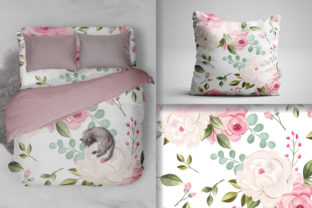
Selecting the right digital assets is a critical step in ensuring the visual success of creative projects. For designers, crafters, and content creators focusing on spring themes or soft aesthetics, Watercolor Floral Patterns Vol.3 presents a specific solution tailored to these needs. This collection consists of six seamless patterns featuring hand-painted pink flowers and blooms. Understanding the technical specifications, aesthetic applications, and practical limitations of this asset pack is essential for determining whether it aligns with current project requirements or if alternative resources might be more appropriate.
Understanding the Asset Specifications
Before integrating any digital pattern into a workflow, it is necessary to evaluate the technical deliverables. Watercolor Floral Patterns Vol.3 provides files in two distinct formats, each serving different functional purposes. The set includes JPEG files at 5000x5000 pixels and PNG files with transparent backgrounds at high resolution.
The 5000-pixel dimension is a significant factor for print-based projects. At standard printing resolutions of 300 DPI, these files allow for high-quality output up to approximately 16.6 inches square without pixelation. This makes the collection viable for physical products such as wrapping paper, fabric printing, and large-format party decorations. The seamless nature of the JPEGs ensures that the pattern can be tiled infinitely across larger surfaces without visible breaks or misalignment, which is a fundamental requirement for textile and wallpaper design.
The inclusion of transparent PNGs adds versatility for digital and composite work. Unlike standard raster patterns that require masking to remove backgrounds, these files allow for direct layering over colored bases or other textures. This format is particularly relevant for web backgrounds, blog headers, and digital scrapbooking where non-destructive editing is preferred. However, users should verify file sizes before use, as high-resolution transparent PNGs can be data-heavy and may impact page load speeds if used directly on websites without optimization.
Aesthetic Alignment and Use Cases
The visual identity of this collection is defined by delicate, hand-painted spring florals in pink tones. This specific aesthetic dictates where the asset performs best. The organic, watercolor texture offers a softer alternative to vector-based floral designs, making it suitable for projects requiring a human touch or artisanal quality.
Primary use cases where this style is effective include:
- Wedding Stationery: The soft pink palette and delicate brushwork align with traditional and romantic wedding themes, suitable for invitations, table cards, and signage.
- Seasonal Packaging: Retailers and small businesses focusing on spring promotions, Mother’s Day, or Easter often require thematic packaging that feels fresh and organic.
- Scrapbooking and Journaling: Digital and physical memory keeping often utilizes floral elements as borders or photo mats; the seamless tiling allows for flexible cropping.
- Feminine Brand Identity: Beauty, wellness, or boutique fashion brands targeting a demographic that responds to soft, natural imagery may find this volume useful for social media templates or website accents.
When evaluating fit, consider the existing color palette of the project. While "pink" is the descriptor, watercolor renders can vary significantly in saturation and undertone. It is advisable to test the pattern against brand colors or physical material swatches before committing to full-scale production to ensure color harmony.
Benefits and Practical Advantages
The primary advantage of Watercolor Floral Patterns Vol.3 is the combination of seamlessness and transparency. Many pattern packs offer one or the other, but rarely both in high resolution. Having access to a seamless tile for background fills alongside a transparent cutout for focal points streamlines the design process, reducing the need to source multiple complementary assets.
Furthermore, the hand-painted origin provides uniqueness. In an era where AI-generated imagery and stock vectors are ubiquitous, authentic watercolor textures retain distinct imperfections and flow characteristics that are difficult to replicate synthetically. For designers prioritizing originality and avoiding generic stock aesthetics, this collection offers a tangible artistic value. The resolution also future-proofs the asset; while 5000px is sufficient for current print standards, it provides enough headroom for minor scaling or cropping without immediate quality loss.
Tradeoffs and Considerations
Despite its strengths, this collection has inherent limitations that must be weighed during the selection process. The most obvious constraint is the specific colorway. If a project requires cool tones, dark modes, or high-contrast graphics, these pink spring florals will likely clash or fail to provide adequate visual weight. Color correction is possible, but altering watercolor textures digitally can sometimes result in banding or loss of subtle gradient details.
Variety is another consideration. With only six patterns in the set, the scope for variation within a single large-scale project is limited. For extensive product lines or multi-page publications, six designs may lead to visual repetition. Designers working on comprehensive branding systems might need to supplement this pack with additional volumes or solid coordinating textures to maintain visual interest over time.
Additionally, the stylistic niche is narrow. The "delicate" and "spring" descriptors imply a lightness that may not suit corporate, industrial, or minimalist modern aesthetics. Users seeking bold, graphic, or abstract floral interpretations should recognize that this volume is firmly rooted in traditional, romantic illustration styles.
Comparing Alternatives
Determining whether Watercolor Floral Patterns Vol.3 is the correct choice involves comparing it against available alternatives based on project goals.
Vector vs. Raster: If the project requires infinite scalability for billboards or vehicle wraps, or if precise color matching (Pantone/CMYK) is mandatory, vector-based floral patterns may be superior. Vectors allow for exact color manipulation and scaling without quality loss. Watercolor rasters like this set are better suited for projects where texture and artistic feel take precedence over mathematical precision.
AI-Generated vs. Hand-Painted: AI tools can generate unlimited floral variations instantly. However, they often lack consistent seamlessness and coherent layer separation. If the priority is speed and volume, AI may suffice. If the priority is commercial safety, consistent tiling, and authentic artistic texture, a curated hand-painted set like Vol.3 offers reliability that generative models currently struggle to guarantee.
Larger Bundles vs. Curated Sets: Marketplaces offer mega-bundles with hundreds of patterns. These are cost-effective for generalists who need variety. However, for specialists working on a cohesive spring or wedding campaign, a focused set of six high-quality, stylistically consistent patterns often yields better results than sifting through hundreds of mismatched assets. Cohesion usually outweighs quantity in professional design outcomes.
Making the Final Decision
Watercolor Floral Patterns Vol.3 serves a specific segment of the design market. It is a strong candidate for users who require high-resolution, seamless, and transparent floral assets specifically in a soft pink, spring aesthetic. The technical specifications support both professional print workflows and digital compositing, provided the user accounts for file size management.
Conversely, those requiring diverse colorways, vector scalability, or non-traditional aesthetics should continue their search. When evaluating this asset, download preview files to test resolution and color accuracy against your specific canvas settings. Verify that the six included patterns provide sufficient variety for the intended scope of work. By objectively assessing these factors against project constraints, designers can confidently determine if this collection supports their creative objectives or if alternative resources are required.